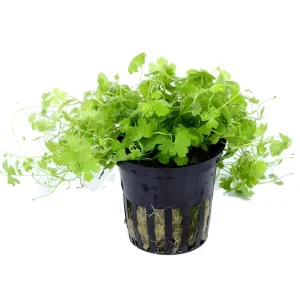
Hydrocotyle tripartita – Potted Aquarium Plant


Original price was: £5.99.£5.09Current price is: £5.09.
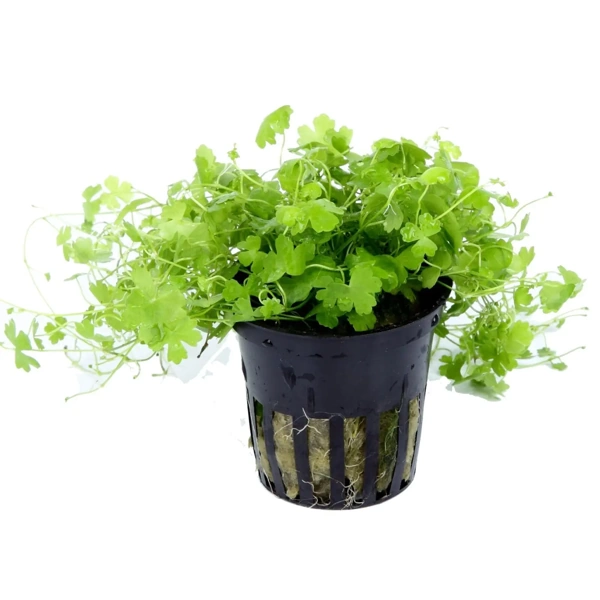
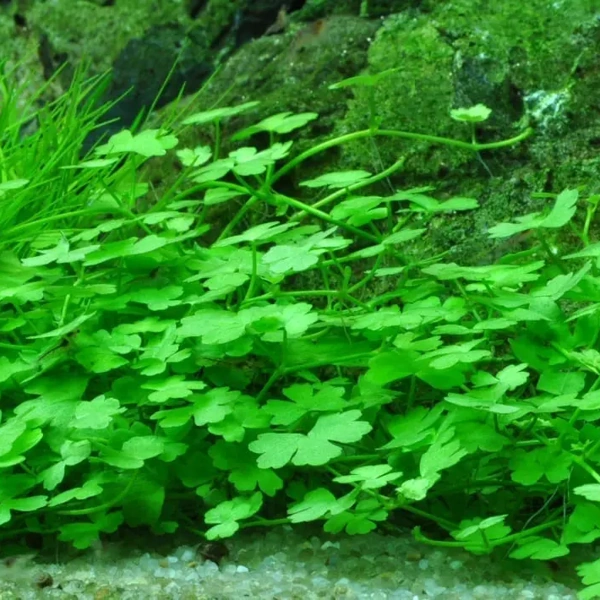
Add a bright patch of green to your aquarium with Hydrocotyle tripartita, also known as Hydrocotyle Japan. Its small, clover-like leaves soften the edges of rocks and create a leafy contrast to grass-like carpeting plants.
- Supplied as a potted aquarium plant.
- Fast-growing, with small, bright green leaves.
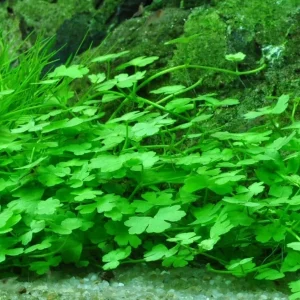
- Use as a foreground carpet or a low mound in the midground.
- Good light and regular trimming help maintain a compact shape.
- Typically around 5–10 cm tall when grown as a carpet.
- Description
- Additional information
Description
Hydrocotyle tripartita for a leafy aquarium foreground
If you like the idea of a carpet but want something with more texture than a lawn, try Hydrocotyle tripartita. Its small, lobed leaves give the foreground a clover-like look. Plant a patch beside a stone to soften its base, or let it form a low mound between taller plants and open substrate.
How to plant potted Hydrocotyle tripartita
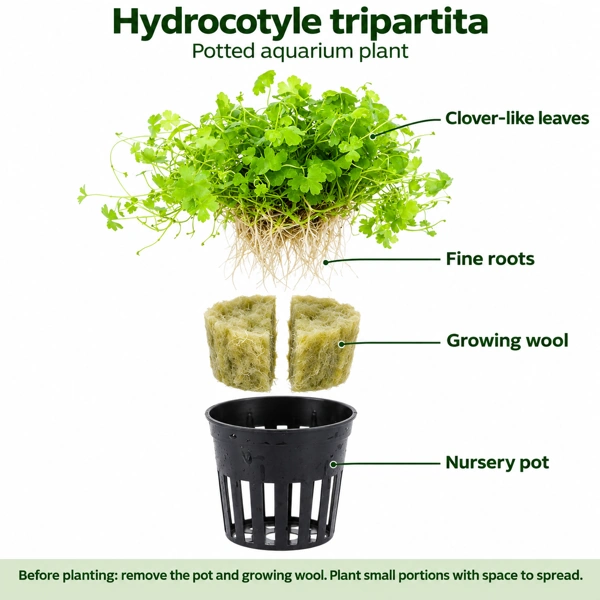
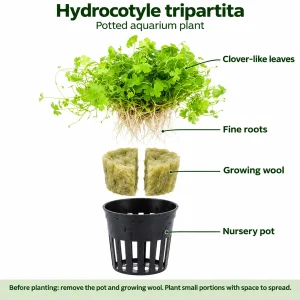
- Remove the nursery pot and gently tease away the growing wool.
- Separate the plant into small portions, taking care with the fine stems.
- Use planting tweezers to tuck each portion into the substrate, leaving the leaves above the surface.
- Leave small gaps between portions so there is space for the shoots to spread.
How to keep it low and compact
Choose an open spot where taller plants will not shade it. Hydrocotyle tripartita forms its most compact carpet in good light. Trim shoots that rise above the patch or spread into neighbouring plants, and lift out the loose clippings afterwards.
What will I receive?
A live Hydrocotyle tripartita plant supplied in a nursery pot. The 5–10 cm figure describes its growth as a carpet in the aquarium; the size and shape of the plant at delivery can vary.
For more planting advice, read our step-by-step guide to planting aquarium plants or browse our aquarium carpeting plants.